
The Veiled Transition: The Erosion of Women’s Rights in Post-Revolutionary Iran
By Jaesun Yang ’27

Today, the most prominent image of Iranian women is often tied to the mandatory hijab and strict dress codes. However, just a few decades ago, the landscape of Iran was remarkably different. Women once chose their own attire and held influential roles in society as independent agents. What historical turning point caused such a drastic shift in such a short time? Let’s explore how the natural freedom once enjoyed by Iranian women met the wall of legal compulsion and how this has reshaped their lives.
The Era of Choice: Iran Before 1979
Before the 1979 Islamic Revolution, Iran was a country defined by rapid modernization and secular reform. Under the Pahlavi dynasty, women experienced a level of social mobility that is difficult to recognize today. Following the "White Revolution" of the 1960s, women gained the right to vote, were encouraged to seek hi

gher education, and entered the workforce in record numbers. The most visible marker of this era was the freedom of dress. In the bustling streets of Tehran, it was common to see women in Western-style skirts and trendy hairstyles walking alongside those who chose the traditional chador. At this time, the hijab was not a state-mandated uniform; it was a matter of personal faith, cultural identity, and—most importantly—individual choice.
The Turning Point: A Revolution of Restriction

The 1979 Revolution replaced the monarchy with a conservative theocracy that viewed the control of women’s appearance as a primary pillar of Islamic identity. By 1983, the hijab became legally mandatory for all women in public, regardless of their personal beliefs or nationality. This change represented a significant regression in human rights. Beyond the fabric of the veil, the new legal framework significantly lowered the marriageable age for girls and restricted women’s rights regarding divorce and child custody. The mandatory hijab and, in more conservative areas, the stifling burqa, became symbols of the state's authority over the female body. The transition from the pre-revolutionary freedom to post-revolutionary restriction marked a clear decline in the fundamental autonomy of women.
Societal Surveillance and the "Morality Police"

To enforce these new norms, the state established the "Morality Police" (Gasht-e Ershad). This specialized force was tasked with patrolling public spaces to ensure women’s attire complied with the government’s strict interpretation of modesty. For decades, tens of thousands of women have faced harassment, fines, and imprisonment for "improper veiling." This constant surveillance created an atmosphere of fear, effectively pushing women out of certain public spheres and chilling their social and political participation.
The Global Perspective: "Woman, Life, Freedom"
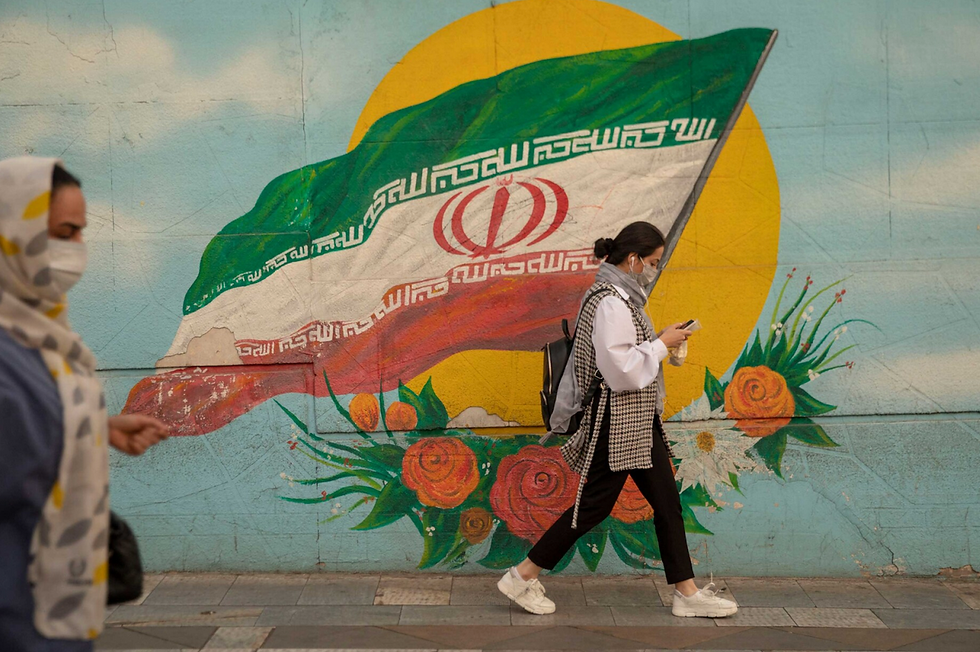
The international community has grown increasingly critical of these restrictions, viewing them not as religious tradition, but as a violation of universal human rights. The 2022 death of Mahsa Amini, a young woman who died in custody after being arrested for an "improper hijab," triggered a global wave of solidarity. Under the slogan "Woman, Life, Freedom," people worldwide have stood with Iranian women who are reclaiming their right to choose. Today, the world recognizes this struggle as a battle for basic human dignity. The contrast between the vibrant, liberated images of pre-1979 Iran and the restrictive reality of today serves as a powerful reminder of how quickly hard-won rights can be dismantled under the guise of religious purity.
Citation
Fig. 1. Pre-1979 Iran: women’s everyday fashion before the revolution. Namu Wiki image host.
Fig. 2. Pre-1979 Iran: women in public spaces before mandatory veiling. Flickr (staticflickr.com).
Fig. 3. The 1979 Revolution and the rise of the Islamic Republic. LSE Blogs (blogsmedia.lse.ac.uk).
Fig. 4. Dress-code enforcement and the “morality police” context. Datocms Assets.
Fig. 5. “Woman, Life, Freedom” protests and global solidarity after 2022. New Lines Magazine (Getty Images file).


Comments